You already own the land. Maybe it’s been in the family for years, or you found the perfect lot in Perry County and jumped on it before the housing market could complicate things. Either way, you’re sitting on something valuable and now you’re wondering what it actually takes to build a custom home on it.
The good news: building on your own land in Pennsylvania is absolutely possible, and it’s often the path to a home that fits your life in ways a pre-built house never could. The honest news: the process has more moving parts than most people expect.
This guide walks you through what to expect — from lot evaluation to breaking ground — so you can move forward with clarity.
Step 1: Evaluate the Land Before You Plan the Home
Before a single design decision is made, the land itself needs to be evaluated. Not all lots are created equal, and factors you can’t see from the road can significantly affect your build timeline, cost, and what’s even possible.
A few key questions to answer early:
- Perc test results: If the property is not on public sewer, a percolation test determines whether the soil can support a septic system. This test is required in Pennsylvania before a sewage permit can be issued — and it can take time to schedule through your county.
- Well vs. public water: Many rural lots in Central PA require a private well. Your builder can help coordinate testing and installation, but it is a cost and timeline factor to plan for.
- Soil and site conditions: The slope of the land, soil composition, and flood zone designations all affect your foundation type and site preparation costs.
- Access and utilities: Does the lot have road frontage? Is electric service nearby, or will it require extension? These details shape your overall budget before construction begins.
A builder experienced with Central Pennsylvania lots, especially in rural counties like Perry, Juniata, and Snyder, can walk the lot with you and flag potential issues before they become expensive surprises.
Step 2: Understand Zoning and Permit Requirements
Pennsylvania home construction is regulated at the township and county level, which means the rules vary depending on exactly where your land sits. What is permitted in one township may require a variance in the next.
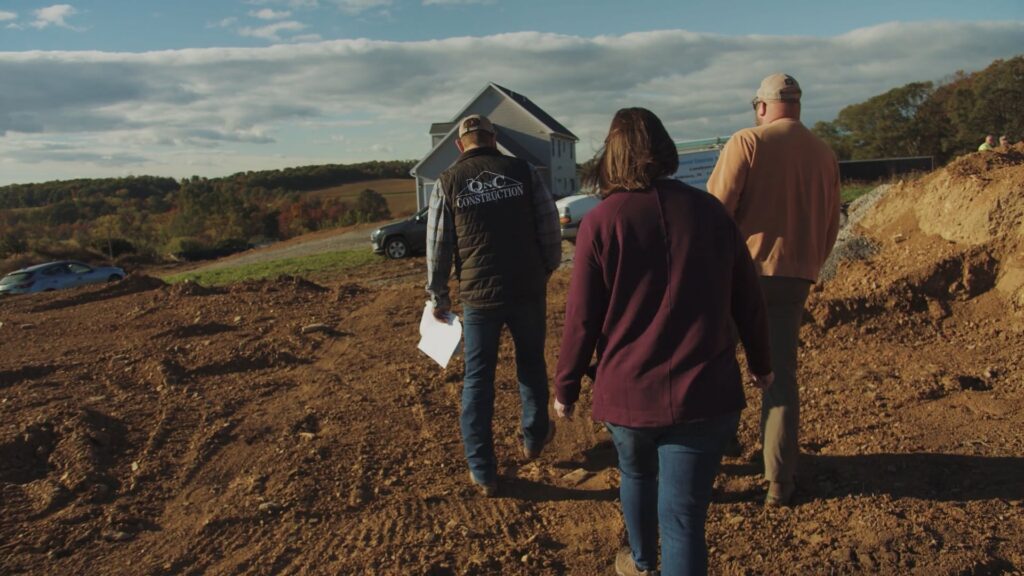
Zoning ordinances will dictate things like minimum lot size for residential construction, setback requirements (how far the home must sit from the property line), height restrictions, and whether accessory structures like garages or sheds are permitted.
In addition to zoning, you will need a building permit from your local municipality before construction can begin. Pennsylvania adopted the Uniform Construction Code (UCC) in 2004, which establishes baseline building standards statewide — but enforcement and inspection procedures are handled locally.
Working with a local builder who knows the permitting landscape in Central PA can save significant time here. Navigating the township office, submitting the right documentation, and anticipating review timelines are part of what an experienced contractor brings to the table.
Step 3: Secure Financing for a Land-and-Build Project
Financing a custom home on your own land is structured differently from a standard mortgage. If you already own the land outright, you may be able to use its appraised value as equity toward the construction loan, which can significantly reduce the amount you need to borrow.
The most common financing path for build-on-your-lot projects is a construction-to-permanent loan. This is a single loan that covers the construction phase and then converts to a traditional mortgage once the home is complete. It simplifies the process and typically requires only one closing.
A few things lenders will want to see before approving a construction loan:
- A signed contract with a licensed builder
- Detailed construction plans and specifications
- A cost breakdown from the builder
- Proof of land ownership or purchase agreement
Getting your financing in order early — ideally before the design phase is too far along — keeps the project moving and ensures you are designing to a realistic budget.
Step 4: Design a Home Built for That Specific Lot
One of the distinct advantages of building on your own land is the ability to design a home that works with the natural characteristics of the site — not against them. A good design-build team will factor in sun orientation, natural drainage, existing trees, views, and topography when developing your floor plan.
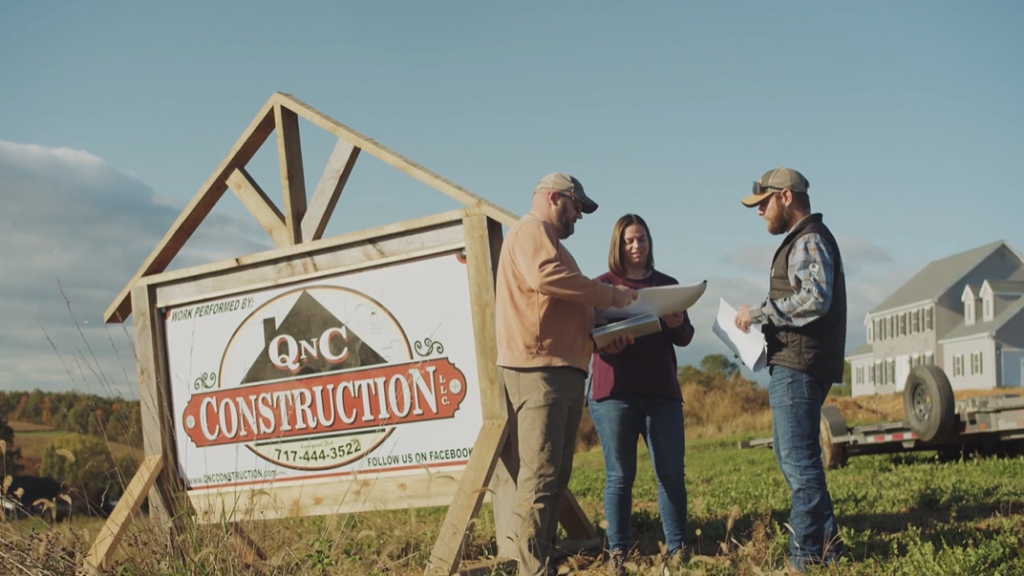
This is where the design-build process earns its value. Rather than choosing from a catalog of plans and hoping one fits your lot, a design-build contractor integrates the site evaluation directly into the design work. The result is a home that feels like it belongs exactly where it was built.
During the design phase, you will make decisions about:
- Foundation type (basement, crawl space, or slab) based on soil conditions
- Home orientation and window placement for natural light and energy efficiency
- Driveway placement and access from the road
- Utility connections and placement of well and septic systems, if applicable
Step 5: Break Ground and Build
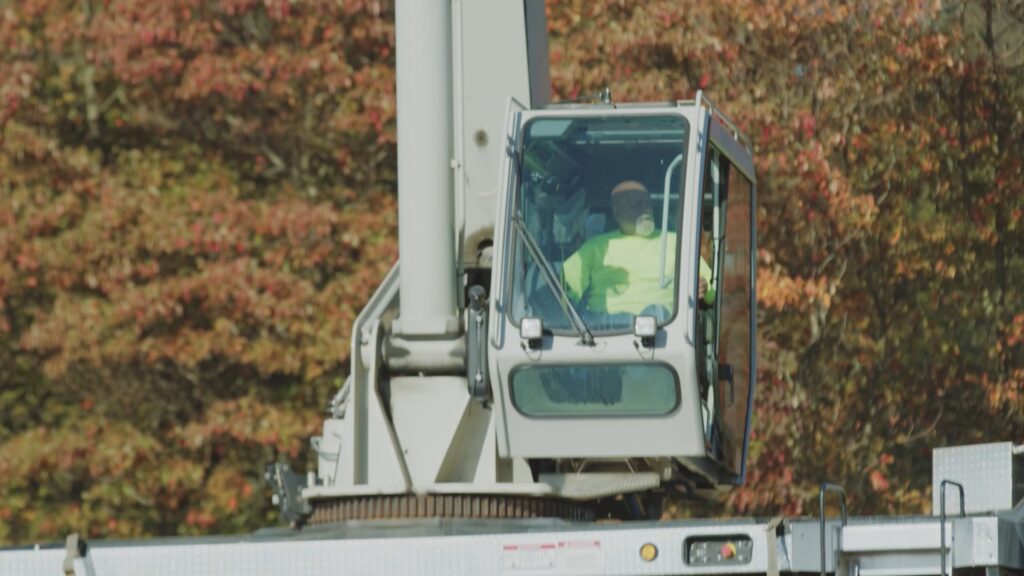
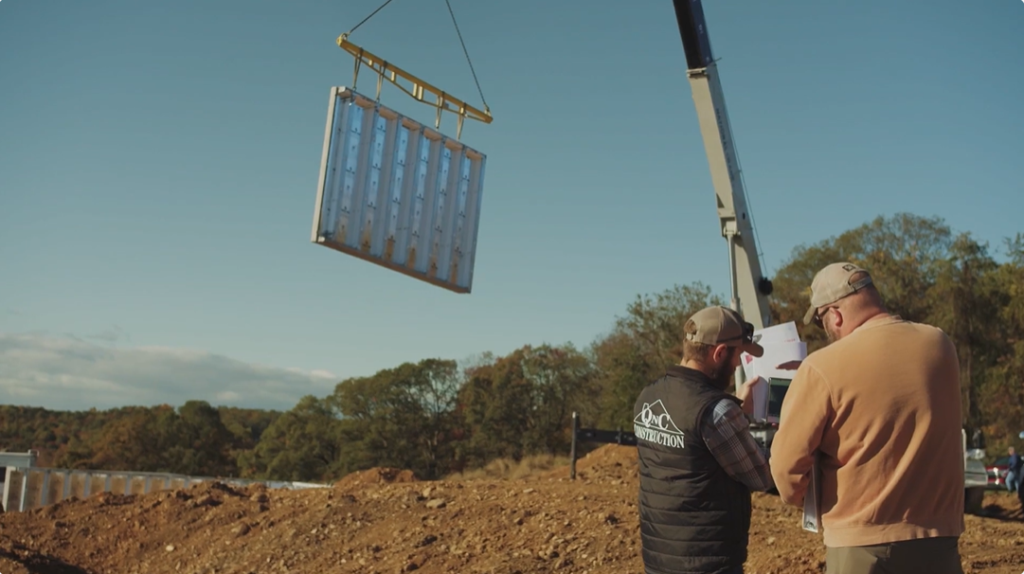
Once permits are secured, financing is in place, and your plans are finalized, construction begins. A well-run build follows a predictable sequence: site preparation and grading, foundation work, framing, rough-in mechanical and electrical, insulation, drywall, and then finishes.
For a custom home in Central Pennsylvania, total construction time typically ranges from six to twelve months, depending on the square footage, site complexity, and material lead times. Your project manager should keep you informed at each phase. A transparent communication process throughout the build is one of the things that separates a good contractor from a great one.
Regular site visits during construction allow you to see progress firsthand and flag any questions before work advances to the next phase. Most issues are far easier to resolve before the walls are closed in.
Why Build-on-Your-Lot Works Well in Central PA
Central Pennsylvania’s rural and semi-rural character makes it one of the best regions in the state for build-on-your-lot construction. Land is more accessible here than in the suburban Philadelphia or Pittsburgh corridors, and the townships that make up Perry, Dauphin, Cumberland, and surrounding counties have well-established processes for residential building permits.
Families who want space — a few acres, a wooded backdrop, room for a workshop or outbuildings — often find that building on land they already own or recently purchased is the most practical path to the home they actually want. The existing housing inventory in the region rarely offers that combination of location, layout, and lot size in a single package.
Building custom also means you are not inheriting someone else’s decisions. Every finish, every room configuration, every detail reflects your preferences, and you start with a home under warranty rather than one with years of deferred maintenance.
Ready to Build on Your Land? Let’s Talk.
QNC Construction has been building custom homes across Central Pennsylvania since 2010. We work with clients who own their land, are in the process of purchasing a lot, or are just beginning to explore whether building is the right path. Our design-build process is built around your vision, and our team will walk you through every phase from site evaluation to move-in day.
If you have land and a vision, we would be glad to sit down with you. Contact us to schedule a consultation and take the first step toward a home that is genuinely yours.